

Elberton granite heritage is visible in the city’s history, public spaces and landmarks. Known as the “Granite Capital of the World,” Elberton offers a clear way to explore how local stone became part of the town’s identity, from quarrying history at the museum to the granite-built Granite Bowl.
- Location: Elberton, Georgia.
- Industry: The local granite industry dates to the 1880s.
- Museum: The Elberton Granite Museum & Exhibit has self-guided exhibits and free admission.
- Landmark: The Granite Bowl stands just west of downtown.
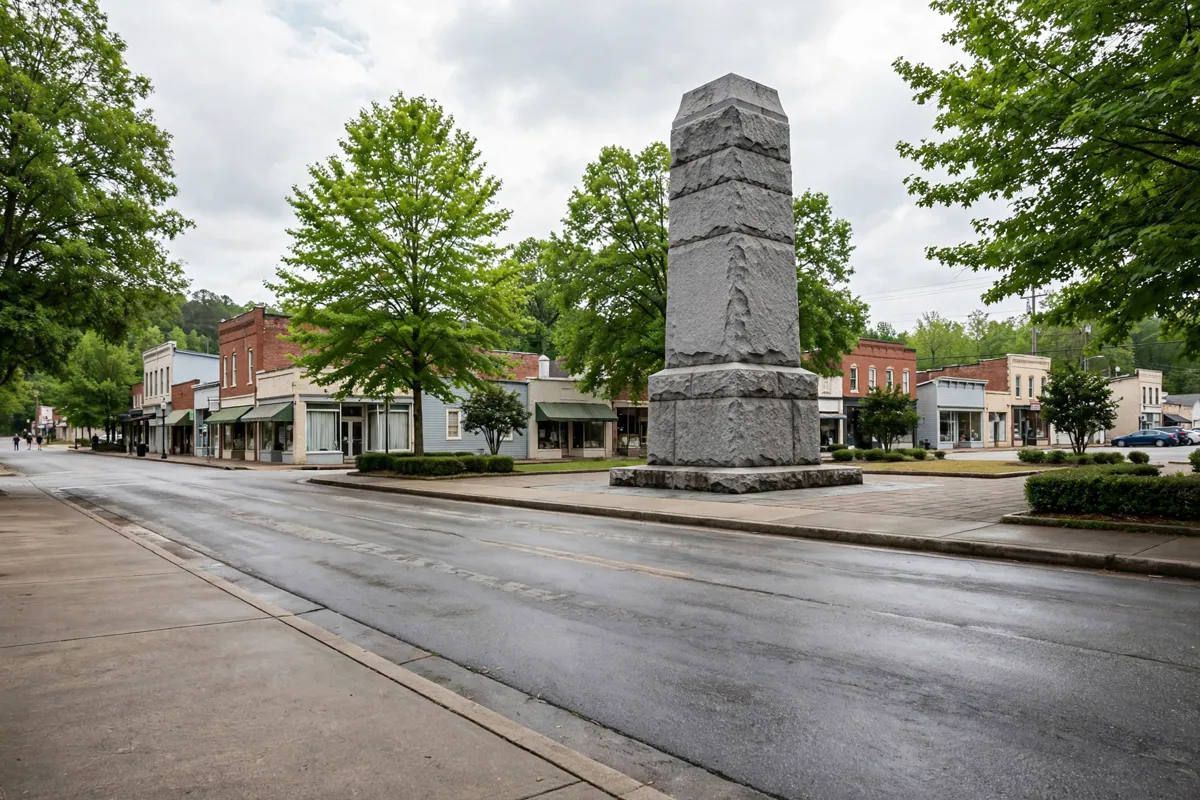
Why Elberton Is Associated with Granite
Elberton’s granite industry began in the 1880s and helped earn the city its familiar nickname. The city says Elberton produces more granite monuments than any other city around the globe, making the stone industry central to its identity.
The area’s granite deposit is approximately 35 miles long and six miles wide, according to a city planning document. Elberton’s first commercial granite quarry opened in 1889, as the city’s historic-preservation design guidelines record. That history connects the region’s large natural deposit with a long-running local trade in quarrying and stonework.
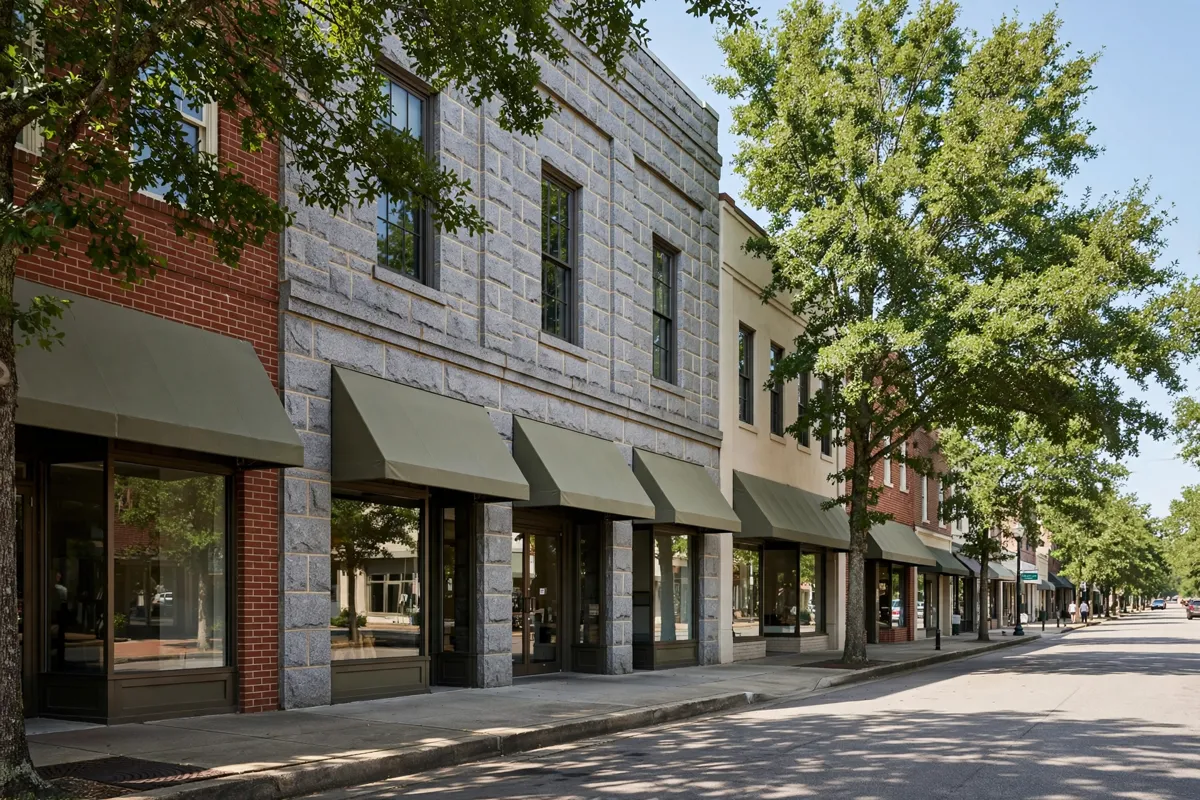
Granite in the Townscape
Granite appears in Elberton not only as a material extracted from the ground, but also in public landmarks and displays. The city identifies the Granite Bowl among its local historic sites; the stadium is built from Elbert County granite and sits just west of downtown, between College Avenue and West Church Street.
The Elbert County Chamber of Commerce describes a downtown display of work by members of the Elberton Granite Association. It is maintained semi-annually at the intersection of Highways 17, 72 and 77, giving you another place to see examples of local stonework in the townscape.

Local History and Visitor Resources
The Elberton Granite Museum & Exhibit brings the industry’s tools and products together in a self-guided visit. The Elberton Granite Association operates the museum, located at 1 Granite Plaza, Elberton, GA 30635. Explore Georgia describes three tiers of exhibits featuring granite products and antique tools used in quarrying, sawing, polishing, cutting and sandblasting cemetery memorials.
One object with a particularly eventful history is “Dutchy,” described as the first statue crafted of Elberton granite. It was toppled in 1900, buried on Sutton Square, exhumed in 1982 and later moved to the museum.
Admission and on-site parking are free, and the museum has public restrooms and is suitable for all ages. The exhibits are self-guided, so you can take them at your own pace. For an account focused on the stadium, the history of Granite Bowl covers its place among Elberton’s granite landmarks.
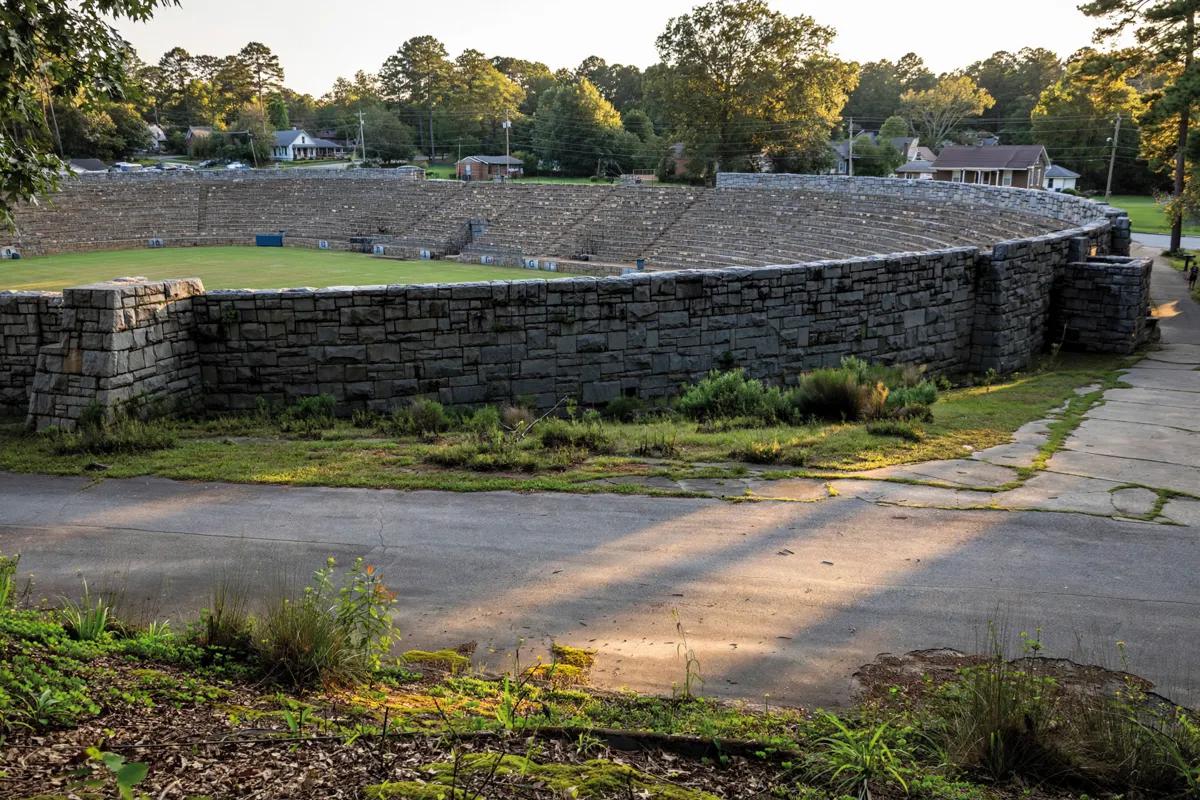
Pair the Story with a Town Visit
The Granite Bowl makes a natural companion to the museum if you want to see local granite on a larger scale.
A city planning document describes it as a 20,000-capacity stadium built with more than 100,000 tons of Elbert County granite. The Elbert County Chamber of Commerce also identifies it as an important historic site and an arena built from local stone.
From Econo Lodge Elberton, the Granite Bowl is about a 3-minute drive. On Elberton’s south side, Granite City Trail is a 20-acre greenspace with a paved walking trail, parking areas, a playground, picnic pavilions and public restrooms.
City street sidewalks connect the trail with downtown. For help fitting the historic sites into a town visit, this Elberton city-centre guide covers the downtown area.
What to Verify Before You Go
Museum hours can affect how you plan the day. Call the museum at (706) 283-2551, and check the official site before you go. The museum is at 1 Granite Plaza.
Opening hours
- Monday to Saturday: 2 PM–5 PM
- Sunday: closed
Last checked November 2026. Hours can change on holidays and for special events.
FAQs
Why is Elberton called the Granite Capital of the World?
The city uses the nickname because it says Elberton produces more granite monuments than any other city around the globe.
What can you see at the Elberton Granite Museum?
The museum displays granite products, antique tools used in working the stone, and “Dutchy,” an early statue made from Elberton granite.
What is the Granite Bowl made of?
The stadium was built with more than 100,000 tons of Elbert County granite.
Does the granite museum charge admission?
Admission is free. Check the museum’s current hours before planning a visit.